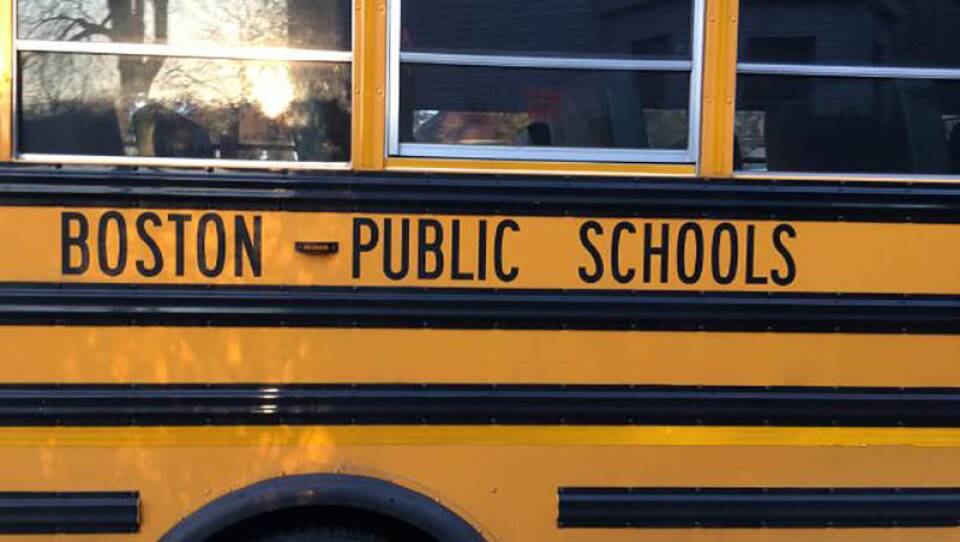

They transport vegetables, electronics — even children.
Commercial drivers are known for hauling loads at night, over long weekends and long distances. But they also include drivers for the MBTA and school bus drivers that get children safely from home to school for districts.
Across the U.S., roughly 200,000 immigrants with legal status hold commercial driver’s licenses. Many are being directly impacted by the Trump administration’s efforts to revoke access to licensure.
In September, the Trump administration said it would revoke access for non-domiciled commercial driver’s licenses, or CDLs, for a slew of immigrants of various legal statuses, including refugees, asylees and those with temporary protected status.
The rule didn’t immediately terminate active CDLs, but encouraged states to revoke renewals and not allow new CDLs.
The Federal Motor Carrier Safety Administration in March put into effect a final rule similar to the one from the fall.
“I’ve lost my driver license. I lost everything,” said Daniel, a Boston Public School driver who was laid off after he couldn’t renew his commercial driver’s license. “I can’t buy anything, pay taxes. I can’t help my family in Haiti. What now? I can’t do anything. This is the hell for me here.” GBH News is only using Daniel’s first name due to his fears of detention and deportation.
Only a few groups — Green Card holders, temporary agricultural and non-agricultural workers (like construction workers) — remain eligible for the licenses.
The revocations are being challenged in court by organizations including the AFL-CIO, which has a case before the DC Circuit Court of appeals. The lawsuit argues that the government issued the rule without notice or comment period as legally mandated.
A federal court decision could allow states to continue renewing CDLs, and ban the Trump administration from retaliating against state registries and licensing agencies for doing so.
A circuit court in DC this week stopped the rule from taking effect for now. It’s unknown when a final decision will come in the case.
But from fall 2025 to early May, Massachusetts’ Registry of Motor Vehicles chose not to allow those non-domiciled drivers to renew their commercial drivers licenses, nor apply for new ones. According to Brian Simoneau, a Marlborough attorney who works with immigrants who have CDLs, the RMV did not need to follow the federal rule during that time based on the earlier court decision.
The state RMV had told GBH News in March that it would abide by the federal rule, only allowing the limited categories for licensure and renewal.
But on Friday, after this story was published, an RMV spokesperson said that the department was “seriously concerned” about the impact of the federal rule on what it estimates to be 1,600 Massachusetts drivers with non-domiciled commercial drivers licenses. It said the rule was “hurting our communities by taking away trained commercial drivers that serve our schools, commuters, and businesses.”
“When the interim rule was stayed by the court, we reverted back to the old rule so that non-domiciled CDLs could continue to be issued and renewed,” the spokesperson said in a statement to GBH News. “We personally reached out to any impacted drivers and went to great lengths to have them come in to renew their CDLs when they still had the chance.”
Simoneau said he’s had clients go to the RMV with their paperwork “lined up to renew.”
“Then they’re told no, and they are shocked. They can’t believe that,” he said.
“A lot of these folks, they’re aware of the federal injunction thinking that that was going to give them some protection, but the registry is just not honoring that.”
The Department of Homeland Security in February said it supported Trump’s proposal of a so-called “Dalilah Law,” which would “bar any state from granting commercial driver’s licenses to illegal aliens,” calling them “reckless and incredibly dangerous to public safety.”
‘They said I can’t drive’
Daniel’s job as a bus driver for Boston Public Schools lasted more than a year. He currently has temporary protected status and political asylum. He tried to renew his CDL several times after it expired in early February.
“When I go [went] to work, they said I can’t drive,” he said.
He immigrated to Massachusetts in 2019, and gained a status called temporary protected status, an immigration protection that allows immigrants from certain countries to legally work and remain in the U.S., safe from deportation.
To get a CDL, he needed a valid work authorization; proof of legal presence; asocial security number; and a valid state driver’s license. He also had to pass a background check.
“Every time I go to do the RMV, they say I can’t renew my CDL, because I don’t have a new work permit,” he said. The district contracts through company Transdev, and requires a CDL to get the position.
The Boston Public School district says it’s preparing for more drivers to potentially be affected by the state’s license nonrenewals for some immigrants.
“We are monitoring and adjusting for the potential impact on bus drivers with temporary protective status not being able to renew their CDLs may have on our transportation operations in the short and long term, and will remain in close coordination with Transdev and the bus drivers’ union to minimize disruption as best we can,” said Samara Pinto, deputy press secretary for BPS.
“All state and federal laws must be followed and we are committed to ensuring that bus drivers meet the licensing, certification, and employment requirements necessary to safely transport students,” she said in an email.
Daniel has a wife who is a paraprofessional at a local school and two young children. He lost about $4,000 a month in salary and is anxious that employers won’t hire him due to worries about TPS being terminated. The children have noticed, he said.
“Every time when the kids see me at home, they say ‘father when are you going to get a job? Where are we going to live, father?’ He said they worry that they won’t have food or clothes if he doesn’t work.
Asked whether the school district offered support for the family, he said, “No one said anything.”
It’s unclear how many drivers will be affected, and what discussions are being had between the district and state registry.
Pastor Dieufort “Keke” Fleurrisaint, the founder of True Alliance Center, said that at least six people have approached him saying they can’t renew their CDL. “I’m sure there are many more,” he said.
Fleurrisaint said that Haitian temporary protected status holders are already dealing with the anxiety of potentially losing status, depending on how the Supreme Court rules in June. He said having the immediate loss of a job is “terrible.”
“People really depend on that funding, for families, because this is really, this is a great-paying type of job,” he said.
Simoneau said he’s concerned about the already existing shortage of CDL drivers in an economy that relies on the driving industry, saying this will “exacerbate the problem.”
“They’re well-paying jobs, and these people are qualified to do them, and they’ve done them,” he said. “They’ve demonstrated their ability to drive. They’ve passed the test, they’ve gotten the jobs as truck drivers, and they just go to renew the license, and then the rug gets pulled out from under them. It’s not fair to them, it’s not good to their employers.”



