

For the first time since 2022, Massachusetts is allowing more farmers and farmers’ markets to participate in a food assistance program that could help their customers pay for fresh fruit and vegetables.
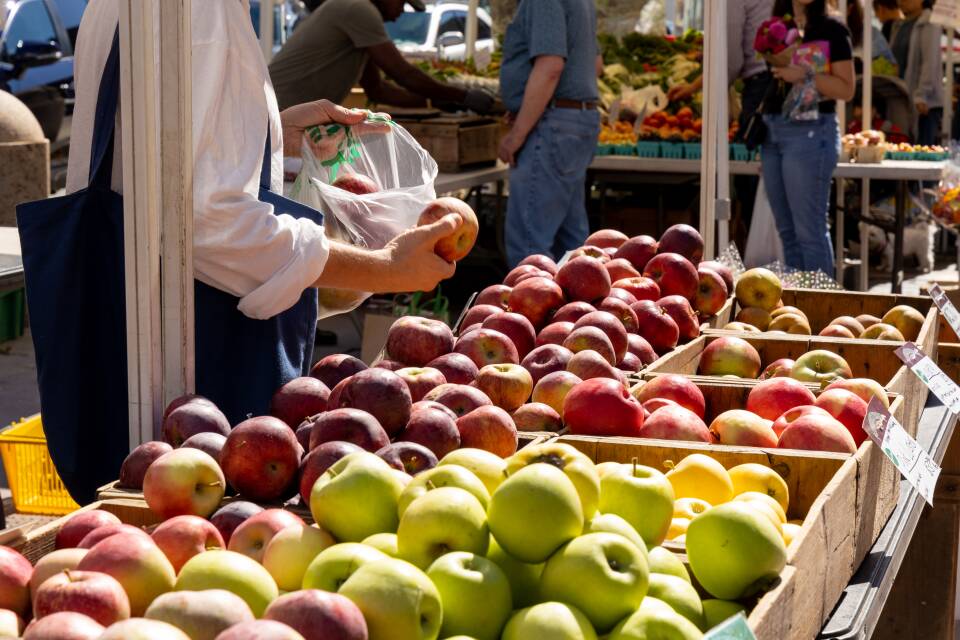
The Healthy Incentives Program, known as HIP, provides food-insecure households with as much as $80 a month to buy produce from farmstands, farmers markets and farm-share programs around the commonwealth. The goal of the program is to increase access to nutritious food while also supporting farmers.
HIP recipients can only use their funds at locations that the state has approved as vendors. Anti-hunger advocates say that by accepting new vendors, the state is expanding access to the program.
“I’m thrilled,” said Rebecca Miller, the policy director at the Massachusetts Food System Collaborative. “I hope that we get as many farms, farmers markets, mobile markets, etc., that can apply to it and be accepted.”
Although there are currently more than 500 vendors across the state, other farmers and managers of farmers’ markets have complained that they’ve been unable to join the program. They say the cap on vendor enrollment has been detrimental to families in areas like Central Massachusetts where there are few approved vendors.
State officials have said the restrictions on enrollment have been due to a shortage of funding for the program over the years. However, recent increases in funding for HIP have put it on more solid financial footing, allowing the Department of Transitional Assistance to reopen the application process.
State officials said expanding the program is part of an effort to address rising food insecurity. In a press release, they acknowledged that enrolling more vendors makes HIP more accessible.
Related Stories


“Expanding this program means more families can access nutritious food while providing Massachusetts farmers with another source of income,” said Massachusetts’ Health and Human Services Secretary Kiame Mahaniah.
GBH News has previously reported that food insecurity experts and farmers across Massachusetts have been calling on the state to approve and onboard new vendors. They note that the yearslong cap on enrollment has been a way for the state to conserve money for HIP. That’s because when there are more vendors participating in the program, it’s easier for HIP recipients to find places to spend their money, which depletes funds for the program quicker.
HIP recipients’ benefits reset each month to the maximum amount they are entitled to — $40, $60 or $80 depending on household size. In the past, funding for the program has been so tight that the Department of Transitional Assistance had to temporarily reduce benefits to $20 a month in 2024. Funding for the program has increased since then to more than $30 million.
The current application window to become a vendor runs until Dec. 10. Vendors who are selected and approved will be brought into the program in phases. The Department of Transitional Assistance has not responded to questions from GBH News about why the window is only a month long and whether there will be more opportunities in the near future for farms and farmers markets to enroll in the program.
As they review applications, state officials say they want to prioritize farmers and farmers markets in communities with limited access to HIP vendors, particularly low-income and historically underserved areas. That’s welcome news to anti-hunger advocates who point out that Greater Boston has a higher share of HIP vendors than other parts of the state.
Miller said the Cape and Islands and Worcester County, in particular, need more HIP vendors. She hopes the state also spearheads marketing efforts to help make people aware of the new vendors that will start accepting HIP money.
“You have to target the locations that have low access for our program to be equitable, and then also as much as is feasible, make sure that those new locations can thrive,” Miller said.
Rock Harvest Farm in New Braintree is among the farms around the state that have been struggling to become HIP vendors over the years.
Laura Leighton, the owner of Rock Harvest Farm, said she’s repeatedly emailed and called state officials asking when they would accept new applications. As soon as she learned they finally would, she didn’t hesitate to send hers off.
“It has been such a long journey,” Leighton said. “Farming for me is a mission to feed as many people as possible regardless of whether or not they have any money or where they live or anything like that. And so programs like HIP make it possible for me to more effectively carry out that mission.”


