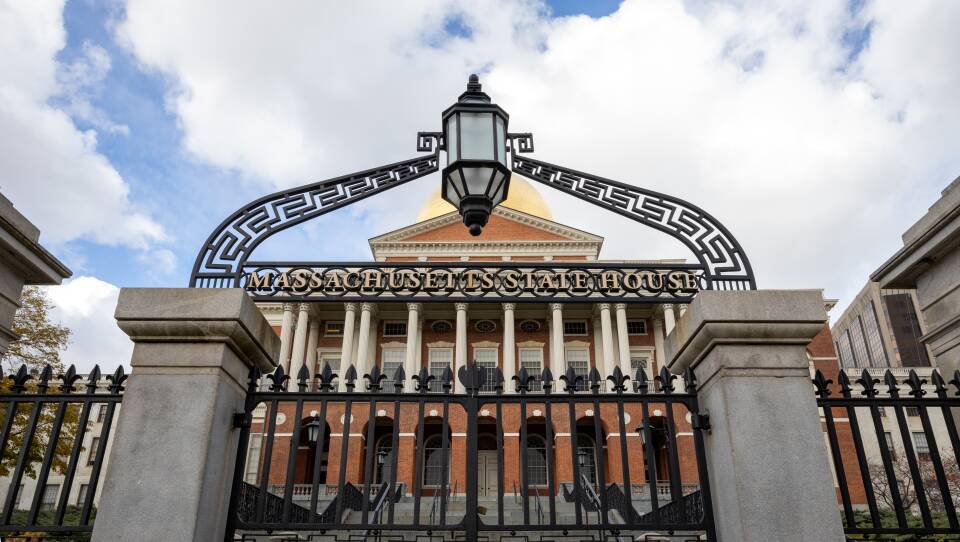

Gov. Maura Healey has tried twice to give cities and towns the ability to collect more revenue by raising some local taxes. State lawmakers have now rebuffed the idea for the second session in a row.
In January 2025, Healey filed legislation dubbed the Municipal Empowerment Act, intended to help local governments run more efficiently and tackle financial challenges. It was the second time she put forward a version of the bill, after the first version died the previous term without a vote in the Legislature.
The bill, among other measures, included sections that would let cities and towns adopt an extra surcharge on top of their existing motor vehicle excise taxes and increase local meals and lodging taxes in communities that have adopted those taxes. It wouldn’t require any municipality to raise taxes.
State law sets a series of rules for how cities and towns can raise the money to fund public services. Increases in property taxes, the main revenue source for local governments, are capped under a 1980 voter-passed law known as Proposition 2 1/2. Municipalities also get money from the state, and can adopt limited local taxes on meals and hotel rooms.
Healey, when she filed the bill last year, said in a message to lawmakers that it would “give local leaders the ability to make decisions that are best for their communities” and could “help them avoid raising property taxes on residents who are already struggling with the high cost of housing.”
Her pitch did not win over state representatives on the Revenue Committee, who on May 14 quietly sent the tax portions of Healey’s bill to a legislative dead-end. The committee ordered further study on those pieces of the bill, effectively killing them.
The committee’s decision comes in an election year where Healey and her Republican challengers, Mike Minogue and Brian Shortsleeve, are all campaigning on messages of affordability. Budget squeezes are leaving many voters and local governments to choose between service cuts or higher property taxes.
The Massachusetts Municipal Association, which represents city and town governments, had been advocating for the local option tax increases, as well as the broader Municipal Empowerment Act. MMA executive director Adam Chapdelaine said cities and towns “still need any revenue flexibility they can get” to work their way through what the association has described as a fiscal crisis.
“That being said, we also understand this is a time where affordability for residents is front and center,” Chapdelaine told GBH News. “And for the Legislature, not to speak for them, but I can imagine their perspective of having a lot of concerns about how anything that addresses — or seems to impact — affordability might impact residents.”
The Healey administration estimated that each tax option could generate tens of millions of dollars a year in extra local revenues across the state: $57 million from raising the ceiling for the local lodging tax, $62 million from a higher maximum local meals tax, and $52 million from the surcharge on car excise taxes. The surcharge, in communities that chose to adopt it, would increase the average excise tax bill by up to $8.20, according to the administration.
The Massachusetts Fiscal Alliance had urged lawmakers to reject Healey’s local tax proposal. Paul Craney, the group’s executive director, said he doesn’t think other tax hikes are the solution to rising property tax bills.
A lesser-known feature of the Proposition 2/12 property tax law, Craney said, is that it also lowered the statewide vehicle excise tax rate to $25 per every $1,000 of a car’s value.
“For a lot of people, they get this tax bill once a year and they kind of feel like they’re getting taxed to death, because they’ve already paid a sales tax when they purchased their vehicle and they’ve paid an income tax when they saved up the money to purchase that vehicle, and now they’re just getting taxed again,” he said.
Other pieces of Healey’s Municipal Empowerment Act are still alive and pending before the House Ways and Means Committee, which could send them to a vote by the full House. The surviving legislation includes procurement reforms and language that would permanently allow remote and hybrid options for public meetings, a flexibility first created during the early phase of the COVID-19 pandemic and re-upped through several temporary extensions since then.
The bill as a whole, Chapdelaine said, grew from listening sessions that Healey and Lt. Gov. Kim Driscoll held with local officials to hear about where state government could help. Though the tax pieces have been shelved, Chapdelaine said the rest of the bill could still get over the finish line this year.
“I can’t promise anything, but I think we have a good feeling that it will get done this session,” he said.



