Power the news you rely on!
Support GBH 89.7 today to fund the fact-based journalism and insightful conversations you hear every day. Your gift keeps independent news free and accessible to everyone.
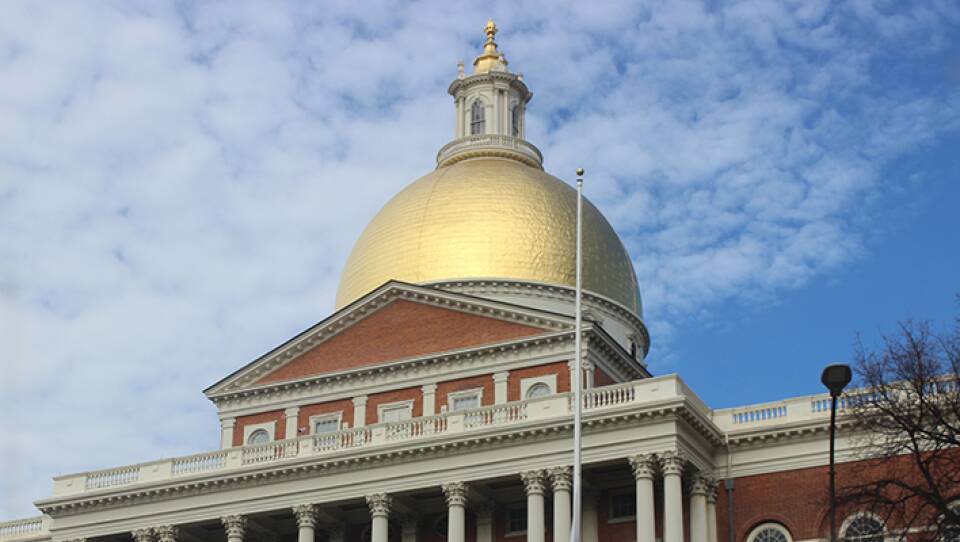

An initiative that aims to lower the income tax to 4% from 5% over the next three years could appear on the ballot in November.
But according to state officials, the measure would not just lower state revenue. It would also wipe out a state deduction for charitable donations and increase a tax paid by several small businesses.
The charitable deduction was approved by voters in 2000, the same year voters approved a tax cut that decreased the rate from 5.95% to 5%.
According to the State House News Service, the 2002 law stipulates that “no [charitable] deduction shall be allowed in any taxable year unless the rate of tax ... in the prior taxable year was equal to 5 per cent.”
The deduction only took effect recently because that reduction to 5% didn’t take effect for two decades. In 2002, state lawmakers postponed its implementation, lowering the tax rate over time. In 2020, the 5% tax rate went into effect, but the charitable deduction was further delayed until 2023 due to the pandemic.
Jim Klocke, CEO of the Massachusetts Council of Nonprofits, said if the new cut goes through, the cost of charitable giving will rise by $480 million by 2031.
“This would make it more expensive in Massachusetts to make charitable donations, and 90% of all nonprofits rely on charitable donations,” Klocke said. “We want to encourage donations … we want to make donations easier. And above all, we don’t want to make donations more expensive.”
Klocke said given the loss of federal funding and service cuts, it is more critical than ever that the charitable deduction remains in place.
“There are a lot of pressures that nonprofits are under these days. Many of them come from a whole host of federal actions over the past year and a half,” he said. “Charitable giving is more important than ever, which is why we need the charitable deduction in Massachusetts to stay in place.”
Chris Keohan, spokesperson for the Taxpayers for an Affordable Massachusetts ballot committee, said in response to the potential loss of the charitable deduction, “We will not be distracted by attempts to shift attention away from the simple fact that this proposal delivers broad-based tax relief to the people of Massachusetts.”
“This ballot question puts an average of $1,300 back into the pockets of Massachusetts families — real money that can help offset the rising cost of living,” he said.
Aside from the charitable deduction, supporters and detractors of the ballot question have debated the effect of the loss of state revenue.
Cindy Rowe, president and CEO of the Jewish Alliance for Law and Social Action who is also a steering committee member for the union-backed progressive group Raise Up Massachusetts, said the measure would create a $5 billion dollar hole in the state budget.
“If you rely on state services, you will be feeling the impact of this ballot question. That means people who are low and moderate income earners, and that’s frankly almost all of us in this state,” she said. “It really is something that will benefit the rich corporate interests in our state and no one else.”
Raise Up Massachusetts is headed to the Supreme Judicial Court on Monday to in an effort to keep the question off the ballot.
But Pioneer Institute Executive Director Jim Stergios said that the $5 billion budget impact is an overstatement.
“We think that the impact is about $700 million for the first year, and that’s about 1.1% of the budget,” he said. “If the state cannot pay its bill by 1%, I don’t know why they think that all the households across Massachusetts have to continue to do this.”
Stergios said Massachusetts has lost 35,000 jobs within the last three years.
“That means people are not investing in Massachusetts anymore, and that’s largely because of our tax structures and our cost structures,” he said. “This ballot question, if passed, would create 50,000 jobs. That would make up for all the loss we had plus some. We need to get the economy going again so we can keep younger people here.”



