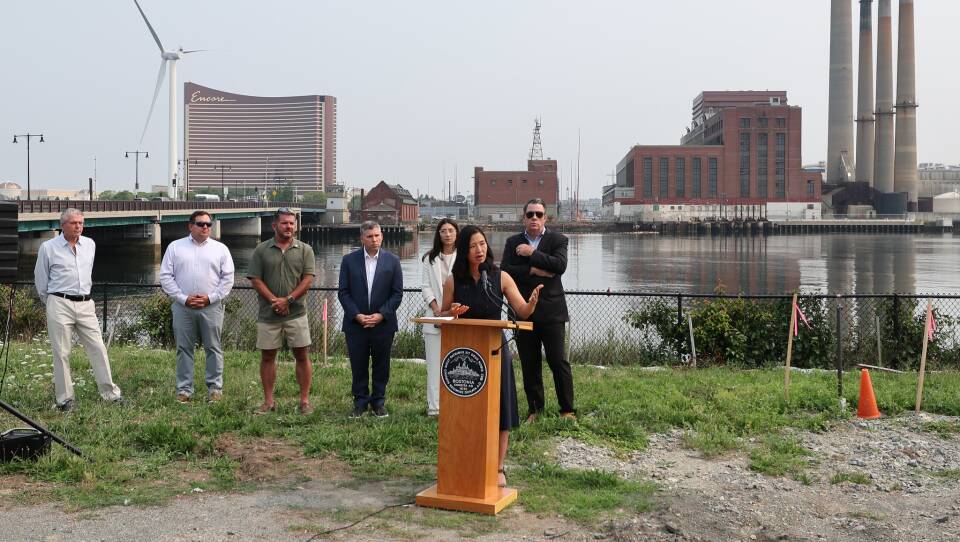

A proposed 25,000-seat soccer stadium in Everett edged closer to reality on Wednesday with the striking of a community benefits agreement between the city of Boston and the Kraft Group–owned company planning to build the stadium to host New England Revolution, Robert Kraft’s soccer team.
The agreement includes nearly $48 million in payments to Boston over the next 15 years, according to a statement from Boston Mayor Michelle Wu. It also commits the Kraft Group to make “substantial infrastructure improvements” in Charlestown’s Sullivan Square before the stadium opens, and to fund safety and transportation management costs for stadium events.
“The city fought for a fair deal for Boston and our residents, and that is what we have achieved through this agreement,” Mayor Wu said in her statement.
The city of Everett also struck its own community agreement with Kraft on Wednesday. Both were legal requirements for the project to move forward.
Longtime stadium proponent state Sen. Sal DiDomenico, who represents both Everett and Charlestown, called the agreements “a really important step.”
“This is really, you know, in my mind, a big win for infrastructure improvements in the area, a big win for funding for residents and things they care about, and also getting this project on track to be completed. So this is a great way to end the year,” DiDomenico told GBH News.

The stadium project will cap the career of Everett Mayor Carlo DeMaria, who lost his bid for a seventh term.
“My vision for Everett has been for our city to have a vibrant waterfront with access for our residents, new clean industries that bring our residents construction and long-term job opportunities, improved public transit options, and new revenue sources to support city services,” DeMaria said in a statement.
In addition to millions toward city infrastructure, DeMaria said the Kraft Group dedicated an estimated $100 million for environmental cleanup at the stadium site, where the former Mystic generating plant operated.
While the stadium would be located in Everett, the deal reflects Boston’s stake in the project. Wu and other city leaders had expressed concerns about how the stadium would impact residents of Charlestown, which sits directly across the Mystic River from the proposed site.
Neighborhood groups and city officials had raised concerns in particular about traffic and fans swarming through the neighborhood en route to the stadium.
With extremely limited on-site parking, stadium-goers would be expected to largely rely on public transit with many coming across a proposed pedestrian bridge from the Sullivan Street MBTA.
Boston City Councilor Gabriela Coletta Zapata, who along with community leaders in Charlestown had raised early concerns, welcomed the agreement that will bring major infrastructure improvements in Sullivan Square and the surrounding area.
“Charlestown has been clear that a project of this scale must come with real mitigation,” Coletta Zapata said in a statement. “These investments will deliver necessary improvements for Charlestown residents before the stadium opens and make clear that major developments in Boston must deliver meaningful benefits to the neighborhoods they impact.”
Under the agreement, the Kraft Group will make an initial payment of $3 million over six years toward the Charlestown Community Impact Fund which supports various Charlestown organizations. A portion of future ticket revenues will also be directed to “Charlestown-specific” municipal projects.
Community benefit agreements, also called mitigation agreements, are commonly negotiated between municipalities and developers when a project is expected to impact a neighborhood.
In August, Mayor Wu publicly criticized Kraft’s proposals, saying they “didn’t come close” to addressing the strain the stadium would place on the area, citing the stadium’s impact on traffic, pollution, and noise in Charlestown. Any agreement with Boston she said would need to spell out a “clear plan for transportation,” noise and climate mitigation and a workforce plan.
The community impact agreements struck Wednesday do not mean an immediate start of construction, but instead open the door for a formal project proposal — detailed plans for the stadium construction — which would require further approvals from both Everett and the state. The public will also have further opportunities for input, including on environmental impact.
The stadium could take around four years to build, including demolition and remediation of the former power plant site, as well as permitting and construction.
The preliminary agreement to build the stadium signed in late 2023 between the city of Everett and Kraft’s group also calls for construction of an adjacent four-acre public waterfront park and $10 million towards a “housing stabilization fund” in the city.