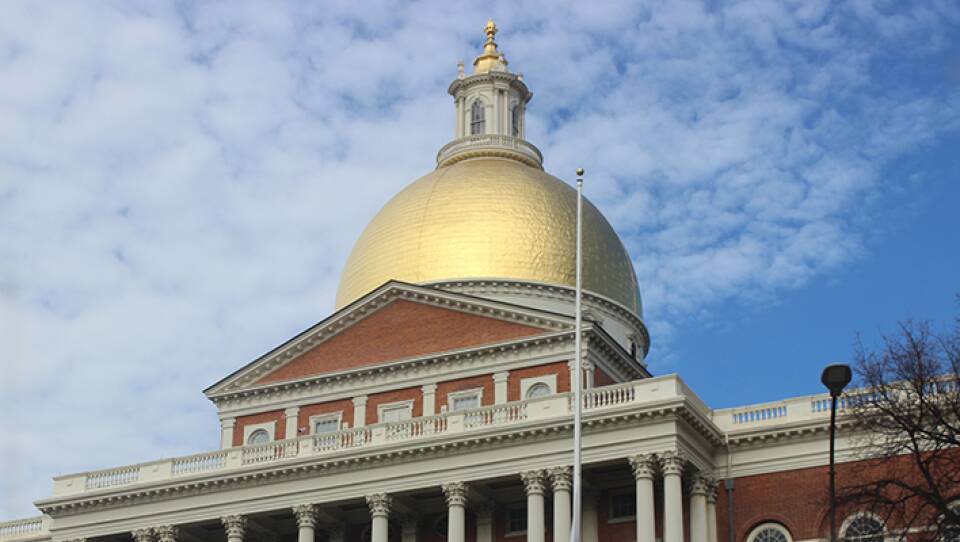


After a long delay in which Massachusetts became the last state in the nation without an annual budget, lawmakers finally approved a $43.1 billion spending plan yesterday. WGBH News State House reporter Mike Deehan spoke with WGBH Radio’s Arun Rath to break down where the money is going. This transcript has been edited for clarity.
Arun Rath: Forty-three billion dollars sounds like an awful lot of money. How does the state actually generate all that?
Mike Deehan: Right off the bat, about $13 billion is from the federal government, they give that to the state. But that leaves about $30 billion from state tax dollars. About $17.3 billion is from the state income tax, that’s the biggest chunk out of everything. The sales tax contributes almost $5 billion every year into the budget, and the corporate tax is about $2.5 billion. Things like the new marijuana tax brought in $132.5 million last year. That’s pretty small change, but there are only a handful of stores open right now. Twenty-seven and a half million came from the new Airbnb tax that got instituted, so that’s new money the legislature can play with. One thing that’s coming up is $215 million comes from casinos, now that we’re seeing those open up across the state. So that is a new revenue stream the state is adding into these services and into this budget.
Rath: So that’s where all the money is coming from. Now that the state has it, where is that money going to go?
Deehan: Far and away the biggest item that the state spends its money on, over a third of the entire budget, goes to healthcare and the MassHealth program, which is insurance coverage for children and the poor. Compare that, over a third, to education. Only 13 percent of the budget goes to education. That includes everything from kindergarten, K-12, to community colleges, all the way up to UMass. Transportation and welfare programs, they’re also about 12 perce apiece when it comes to this pie chart idea of the budget. And then you’ve got everything else: pensions, energy, prisons, public safety. That’s all in that remaining quarter of the budget. They’re nothing compared to what the state spends on health.
Rath: Wasn’t health care spending and issues over that a big part of why the budget was late?
Deehan: That really was one of the reasons why this budget was six weeks late, why they blew that July 1st deadline.
Rath: For education, that smaller but smaller but still pretty substantial part of the budget — did the controversy over taxes going to cities and towns to fund K-12 education get resolved in this budget?
Deehan: In the very short-term, yes, there’s a budget so they will be funded for the coming school year. But it didn’t do what a lot of these advocates want. And what we on Beacon Hill keep expecting to happen over the next year or so is an overhauling of the Chapter 70 formula. This is the formula that divvies out tax money to cities and towns and school districts so that they can operate. This is something that’s been going on for an awfully long time. We’re getting to the point now where over the next few months, different teachers unions, municipalities, school districts are bringing litigation against the state, saying that this formula, as it is, is not fair. It doesn’t do enough to solve the racial achievement gap, it doesn’t do enough for special education students, it doesn’t do enough for English language learner students, and towns that have those needs are hurt by this formula. That is what the next big thing on Beacon Hill is going to be, and it’s probably going to result in much more money going to cities and towns and school districts, which means they might need to raise taxes in order to pay for this infusion of funds. So that is definitely where Beacon Hill’s attention is right now. There’s this overarching theme of what taxes can and should be raised and where that money needs to go. There were a number of promises that lawmakers say, that they’re going to get to education, they’re going to get to this, they’re going to get to that, and we’re seeing that come to fruition very slowly throughout the session.
Rath: In terms of those promises that have been made, how much does this budget give a sense of what the priorities will be?
Deehan: Yeah, it really puts the focus on these big decisions they have to do now. Looking ahead, lawmakers are really going to have to tackle this tax question and the what to spend it on question, whether it’s schools or transportation, bailing out the T or at least giving more money to the MBTA. These are the big basket of items of tax increases that House Speaker Robert DeLeo and Senate President Karen Spilka are focused on — what to raise and where to spend it. That’s where the conversation is going.
Rath: Mike, where the money comes from, where it all goes — you broke it all down for us. Thank you so much.
Deehan: Great to be with you.
Rath: That’s WGBH News State House reporter Mike Deehan, joining us from Beacon Hill for a breakdown of the state budget that was agreed to by the Massachusetts House and Senate. This is WGBH News’ All Things Considered.


