What matters to you.
0:00
0:00
NEXT UP:
 
Top

Forum Network

Free online lectures: Explore a world of ideas

Funding provided by:
FN_CIVIL_RIGHTS_SERIES_08.04.2023
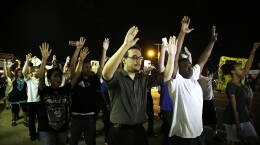
Crowd of people participating in anti-racism protest. Focus is on black woman with raised fist.
drazen_zigic Envato Elements

Civil Rights Movement Series

Lectures examining the Civil Rights Movement from Brown v. Board of Education to the civil and human rights initiatives today. The American Civil Rights Movement (1955-1968) refers to reform movements in the United States aimed at abolishing public and private acts of racial discrimination against African Americans. By 1966, the emergence of the Black Power Movement, which lasted roughly from 1966 to 1975, enlarged and gradually eclipsed the aims of the Civil Rights Movement to include racial dignity, economic and political self-sufficiency, and freedom from white authority. Several scholars refer to the Civil Rights Movement as the Second Reconstruction, a name that alludes to the Reconstruction after the Civil War. Timeline: Brown v. Board of Education, 1954 Rosa Parks and the Montgomery Bus Boycott, 1955-1956 Mass Action Replaces Litigation, 1955-1965 Tallahassee, Florida Boycott, 1956-1957 Desegregating Little Rock, 1957 The Kennedy Administration, 1960-63 Freedom Riders, 1961 Council of Federated Organizations, 1962 The Albany Movement, 1961-1967 The March on Washington, 1963 The Birmingham Campaign, 1963-1964 Race Riots, 1963-1970 The Mississippi Freedom Democratic Party, 1964 Martin Luther King, Jr. awarded the Nobel Peace Prize, 1964 Selma and the Voting Rights Act, 1965 Black Power, 1966 Memphis and the Poor People’s March, 1968 Gates v. Collier Prison Reform Case, 1970-1971

  • **Marian Wright Edleman** delivers the keynote address for the first symposium organized by Trinity Church, convening people across the city to come together to learn, be inspired, and be moved to take effective actions towards facing, healing and ending racism. The symposium was organized by members of the Trinity Anti-Racism Team, as part of the recognition of the Dr. Martin Luther King, Jr. for his commitment to a better America. The The Reverend Samuel T. Lloyd III, Rector of Trinity Church, introduces the symposium saying, "With the recent events in Ferguson, Cleveland, New York, and in our own backyard, this discussion sadly is more urgent than we had imagined. We pray that the day’s conversations will speak powerfully to participants coming from many different perspectives, and that it will inform and inspire effective new initiatives in the long journey we walk on together towards truth and reconciliation."
    Partner:
    Trinity Church
  • In light of increasingly intense, racially charged events in Ferguson, Mo., and elsewhere across the country, Trinity Church in the City of Boston is elevating race relations as a point for public discussion. To spotlight what Trinity Church’s Rector, the Rev. Samuel T. Lloyd, calls “the urgent issue of our time,” Trinity is sponsoring the inaugural Anne B. Bonnyman Symposium – “We Still Have a Dream: End Racism” – on Sun., Jan. 18, 2015. Free and open to the public, the symposium will be held at Trinity Church, Copley Square. Moderator: The Honorable **Barbara Dortch-Okara**
    Partner:
    Trinity Church
  • "Kenneth Mack discusses his book *Representing the Race: The Creation of the Civil Rights Lawyer*. *Representing the Race* tells the story of an enduring paradox of American race relations, through the prism of a collective biography of African American lawyers who worked in the era of segregation. Practicing the law and seeking justice for diverse clients, they confronted a tension between their racial identity as black men and women and their professional identity as lawyers. Both blacks and whites demanded that these attorneys stand apart from their racial community as members of the legal fraternity. Yet, at the same time, they were expected to sympathize with African Americans. This conundrum, as Kenneth Mack shows, continues to reverberate through American politics today. Mack reorients what we thought we knew about famous figures such as Thurgood Marshall, who rose to prominence by convincing local blacks and prominent whites that he was'as nearly as possible'one of them. But he also introduces a little-known cast of characters to the American racial narrative. These include Loren Miller, the biracial Los Angeles lawyer who, after learning in college that he was black, became a Marxist critic of his fellow black attorneys and ultimately a leading civil rights advocate; and Pauli Murray, a black woman who seemed neither black nor white, neither man nor woman, who helped invent sex discrimination as a category of law. The stories of these lawyers pose the unsettling question: what, ultimately, does it mean to 'represent' a minority group in the give-and-take of American law and politics?"
    Partner:
    Harvard Book Store
  • WABE's Valerie Jackson, host of *Between the Lines*, speaks with Michele Norris during the recording of her radio program. In the wake of talk of a “post-racial America” upon the ascendance of Barack Obama as president of the United States, Michele Norris, host of National Public Radio’s *All Things Considered*, set out, through original reporting, to write a book about “the hidden conversation on race” that is going on in this country. But along the way she unearthed painful family secrets—from her father’s shooting by the Birmingham police within weeks of his discharge from service in World War II to her grandmother’s peddling pancake mix as an itinerant Aunt Jemima. In what became an intensely personal and bracing journey, Norris traveled from her childhood home in Minneapolis to her ancestral roots in the Deep South to explore “things left unsaid” by her family when she was growing up. Along the way she discovers how character is forged by both repression and revelation. She learns how silence became a form of self-protection and a means of survival for her parents—strivers determined to create a better life for their children at a time when America was beginning to experiment with racial equality—as it was for white Americans who grew up enforcing strict segregation (sometimes through violence) but who now live in a world where integration is the norm.
    Partner:
    Jimmy Carter Library and Museum
  • A top aide to Martin Luther King, Jr., and one of history's most important civil rights leaders, Andrew Young has been a witness to history and made his own. For years, he has been mentoring his godson, Kabir Sehgal, in correspondence and conversation. Young and Sehgal discuss their new book, *Walk in My Shoes: Conversations between a Civil Rights Legend and his Godson on the Journey Ahead*. They share their thoughts on civil rights, race, faith, love, and leadership. Ted Turner is the host for event.
    Partner:
    Jimmy Carter Library and Museum
  • Rev. Mark Morrison-Reed discusses his book, *In Between: Memoir of an Integration Baby*, his memoir of growing up during the era of the civil rights movement. He wrestles with racism, the death of Martin Luther King, black radicalism, his interracial family and his experience as one of the first black Unitarian Universalist ministers. How does his experience let us gauge the impact of racism in our society? How post-racial is America?
    Partner:
    Cambridge Forum
  • Supreme Court affirmative action cases can be divided into two categories. First are those cases in which race-conscious government action provides a material benefit or preference to members of a minority group (e.g., Adarand and Grutter). Second are those cases where the government takes race-conscious action without causing any concrete disadvantage to non-minorities (e.g., Shaw v. Reno, Parents Involved). Under the Courts current Equal Protection doctrine, both categories of cases are presumptively unconstitutional because they both violate the principle of colorblindness. The colorblindness doctrine is best understood as implicitly holding that non-disadvantaging affirmative action constitutes an expressive harm. This program expands upon the existing scholarship by arguing that functionally, the Court has come to view race-conscious, non-disadvantaging government action as a form of prohibited government speech. In essence, the Court has decided that when the government takes such action, it is sending an unconstitutional message that race still matters in our society. Under the government speech doctrine, however, the government is free to express its own message provided it does not restrict or compel private speech. The fact that members of the Court disagree with this message does not make it unconstitutional.
    Partner:
    Case Western Reserve University
  • Pulitzer Prize--winning journalist Isabel Wilkerson discusses her first book, *The Warmth of Other Suns: The Epic Story of America's Great Migration*. In *The Warmth of Other Suns*, Wilkerson chronicles one of the great untold stories of American history: the decades-long migration of black citizens who fled the South for northern and western cities, in search of a better life. From 1915 to 1970, this exodus of almost six million people changed the face of America. Wilkerson compares this epic migration to the migrations of other peoples in history. Having interviewed more than a thousand people and gained access to new data and official records, she recounts how these American journeys unfolded, altering our cities, our country, and ourselves. Wilkerson tells this story through the lives of three unique individuals: Ida Mae Gladney, who in 1937 left sharecropping and prejudice in Mississippi for Chicago, where she achieved quiet blue-collar success and, in old age, voted for Barack Obama when he ran for an Illinois Senate seat; sharp and quick-tempered George Starling, who in 1945 fled Florida for Harlem, where he endangered his job fighting for civil rights, saw his family fall, and finally found peace in God; and Robert Foster, who left Louisiana in 1953 to pursue a medical career, the personal physician to Ray Charles as part of a glitteringly successful medical career, which allowed him to purchase a grand home where he often threw exuberant parties. Wilkerson captures their first treacherous and exhausting cross-country trips by car and train and their new lives in colonies that grew into ghettos, as well as how they changed these cities with southern food, faith, and culture and improved them with discipline, drive, and hard work.
    Partner:
    Harvard Book Store
  • Historian Anthony Cohen recounts the gripping tale of his ancestor Patrick Sneed’s flight from slavery in 1849. Cohen details his research uncovering his Jewish-Indian-Irish-African slave ancestry as he reconstructed Sneed’s route from Georgia to Canada along the Underground Railroad.
    Partner:
    Jewish Historical Society of Greater Washington
  • Theda Perdue, Professor of Southern Culture at the University of North Carolina, discusses her book *Race and the Atlanta Cotton States Exposition of 1895*. The book examines the world's fair held in Atlanta, where white organizers - in order to attract business to the area - hoped to demonstrate they had solved problems of race in the city. The exposition featured American Indians, African Americans, and other racial, ethnic, and gender communities as part of the event's installations. Perdue finds that this turn-of-the-century performance of race played out in surprising ways, particularly in terms of the voice this event gave to the minorities who took part.
    Partner:
    Atlanta History Center