What matters to you.
0:00
0:00
NEXT UP:
 
Top

Forum Network

Free online lectures: Explore a world of ideas

Funding provided by:
harvardbookstore.jpg.crop_display_0.jpg

Harvard Book Store

Harvard Book Store is an independently run bookstore serving the greater Cambridge area. The bookstore is located in Harvard Square and has been family-owned since 1932. We are known for our extraordinary selection of new, used and remaindered books and for a history of innovation. In 2009, we introduced same-day "green delivery" and a book-making robot capable of printing and binding any of millions of titles in minutes. Find out more about us at www.harvard.com.

http://www.harvard.com

  • Media and technology writer William Powers discusses his new book, *Hamlet′s Blackberry: A Practical Philosophy for Building a Good Life in the Digital Age*. At a time when we′re all trying to make sense of our relentlessly connected lives, this book presents a bold new approach to the digital age. Part intellectual journey, part memoir, *Hamlet′s BlackBerry* sets out to solve what William Powers calls the conundrum of connectedness. Our computers and mobile devices do wonderful things for us. But they also impose an enormous burden, making it harder for us to focus, do our best work, build strong relationships, and find the depth and fulfillment we crave. *Hamlet′s BlackBerry* argues that we need a new way of thinking, an everyday philosophy for life with screens. To find it, Powers reaches into the past, uncovering a rich trove of ideas that have helped people manage and enjoy their connected lives for thousands of years. New technologies have always brought the mix of excitement and stress that we feel today. Drawing on some of history′s most brilliant thinkers, from Plato to Shakespeare to Thoreau, he shows that digital connectedness serves us best when it′s balanced by its opposite, *disconnectedness*.
    Partner:
    Harvard Book Store
  • Memoirist and former Boston Globe book critic Gail Caldwell reads from her new memoir, *Let′s Take the Long Way Home*, about her dear friend and colleague, Pulitzer Prize-winning author Caroline Knapp.
    Partner:
    Harvard Book Store
  • Short story writer and novelist Maile Meloy reads and discusses her newly in paperback collection of stories, *Both Ways Is the Only Way I Want It*. This collection is about the battlefields--and fields of victory--that exist in seemingly harmless spaces, in kitchens and living rooms and cars. Set mostly in the American West, the stories feature small-town lawyers, ranchers, doctors, parents, and children, and explore the moral quandaries of love, family, and friendship. A ranch hand falls for a recent law school graduate who appears unexpectedly--and reluctantly--in his remote Montana town. A young father opens his door to find his dead grandmother standing on the front step. Two women weigh love and betrayal during an early snow. Throughout the book, Meloy examines the tensions between having and wanting, as her characters try to keep hold of opposing forces in their lives: innocence and experience, risk and stability, fidelity and desire.
    Partner:
    Harvard Book Store
  • Director Guillermo del Toro and author Chuck Hogan discuss *The Fall*, the second installment in the *Strain Trilogy*. The pair are interviewed by the Brattle Theatre's creative director, Ned Hinkle. The vampiric virus unleashed in *The Strain* has taken over New York City. It is spreading across the country and soon, the world. Amid the chaos, Eph Goodweather, head of the CDC′s team and one of a small group who have banded together to fight the bloodthirsty monsters that roam the streets, finally manages to identify the parasite that causes the infection. But it may be too late.
    Partner:
    Harvard Book Store
  • Deborah Fallows explores her experiences as an American living in China in her new book, *Dreaming in Chinese: Mandarin Lessons in Life, Love, and Language.* Deborah Fallows has spent much of her life learning languages and traveling around the world, but nothing prepared her for the surprises of learning Mandarin, China's most common language, or the intensity of living in Shanghai and Beijing. Over time, she realized that her struggles and triumphs in studying the language of her adopted home provided small clues to deciphering the behavior and habits of its people. As her skill with Mandarin increased, bits of the language--a word, a phrase, an oddity of grammar--became windows into understanding romance, humor, protocol, relationships, and the overflowing humanity of modern China. Here she shares what she discovered about Mandarin, and how those discoveries helped her understand a culture that had at first seemed impenetrable, *Dreaming in Chinese* opens up China to westerners in an entirely new way.
    Partner:
    Harvard Book Store
  • Mark Vonnegut talks about his memoir *Just Like Someone without Mental Illness Only More So*, a follow-up to the acclaimed *The Eden Express*. Here is Mark’s childhood spent as the son of a struggling writer in a house that eventually held seven children after his aunt and uncle died and left four orphans. And here is the world after Mark was released from a mental hospital to find his family forever altered. At the age of twenty-eight—and after nineteen rejections—Mark was accepted to Harvard Medical School, where he gained purpose, a life, and some control over his mental illness.
    Partner:
    Harvard Book Store
  • **David A, Kessler,** former commissioner of the US food & drug administration, discusses ways the food industry manipulates the way we eat through his book, *The End of Overeating: Taking Control of the Insatiable American Appetite*. Most of us know what it feels like to fall under the spell of food-when one slice of pizza turns into half a pie, or a handful of chips leads to an empty bag. Its harder to understand why we cant seem to stop eating, even when we know better. *The End of Overeating* explains for the first time why it is exceptionally difficult to resist certain foods and why its so easy to overindulge, uncovering facts about how we lose control over our eating habits, and how we can get it back.
    Partner:
    Harvard Book Store
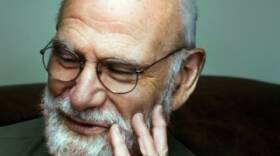
  • Oliver Sacks, neurologist and popularizer of the science of the mind, discusses his newest work, *The Mind's Eye*, in conversation with writer and editor Cullen Murphy. In *The Mind's Eye*, Oliver Sacks tells the stories of people who are able to navigate the world and communicate with others despite losing what many of us consider indispensable senses and abilities: the power of speech, the capacity to recognize faces, the sense of three-dimensional space, the ability to read, the sense of sight. For all of these people, the challenge is to adapt to a radically new way of being in the world. Sacks explores some very strange paradoxes--people who can see perfectly well but cannot recognize their own children, and blind people who become hyper--visual or who navigate by "tongue vision." He also considers more fundamental questions: How do we see? How do we think? How important is internal imagery--or vision, for that matter? Why is it that, although writing is only five thousand years old, humans have a universal, seemingly innate, potential for reading?
    Partner:
    Harvard Book Store
  • Series editor Robert Atwan joins contributors John Summers and Jerald Walker to discuss* The Best American Essays 2010*, the 25th anniversary volume.
    Partner:
    Harvard Book Store
  • David Edwards, Harvard engineering professor, looks at the future of scientific research and his new book, *The Lab: Creativity and Culture*. Six months before opening Le Laboratoire in Paris, David Edwards visited Hans Ulrich Obrist, who had co-curated the famous exhibition "Laboratorium" that explored connections between art and science. "Famous, yes," said Hans, "which I find ironic since almost nobody saw it. You have to be careful getting too near contemporary science." But this was precisely where David Edwards chose to be. His new book, *The Lab*, promotes surprising innovations in culture, industry and society by exploring new ideas in the arts and design at the frontiers of science. Edwards argues for a new kind of educational art lab based on a contemporary science lab model--the "artscience lab." With examples ranging from breathable chocolate to contemporary art installations that explore the neuroscience of fear, he demonstrates how students learn by translating ideas alongside experienced creators and exhibiting risky experimental processes in gallery settings. Idea translation, making the conception real, is in turn facilitated by a network of complementary labs whose missions range from education to industrial and humanitarian development. A manifesto of a new innovation model driven by the arts, this is the first detailed description of an emerging cultural phenomenon in the United States and Europe where artists and scientists collaborate to produce intriguing cultural content and surprising innovations.
    Partner:
    Harvard Book Store