What matters to you.
0:00
0:00
NEXT UP:
 
Top

Forum Network

Free online lectures: Explore a world of ideas

Funding provided by:
CF_Logo_Square.jpeg

Cambridge Forum

Let Cambridge Forum change your mind....

Cambridge Forum hosts free, public discussions that inform and engage, so that people can better explore the varied issues and ideas that shape our changing world. CF broadcasts its live events via podcasts, weekly NPR shows and online presentations via GBH Forum Network on YouTube.

http://www.cambridgeforum.org

  • Journalist and author **Wen Stephenson** discusses his new book, _What We’re Fighting For Now Is Each Other: Dispatches from the Front Lines of Climate Justice_. Stephenson provides a candid look at some of the “new American radicals” who are risking everything to build a stronger climate justice movement. What motivates them? How can individual, local actions really affect a larger global movement? Photo: nationofchange.org
    Partner:
    Cambridge Forum
  • Can a polarized public maintain a healthy democracy? It’s not just the Congress that is ideologically divided. The Pew Research Center recently documented how the American people have become polarized over the past 50 years. **Michael Dimock**, President of the Pew Research Center, discusses this ground-breaking study and its implications for the health of our democracy with **Ted Landsmark**. What can citizens do to create and support effective community dialogues aimed at strengthening social bonds?
    Partner:
    Cambridge Forum
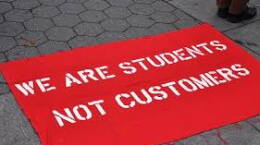
  • The Massachusetts School Law of 1642 laid out the rationale for public education: “Forasmuch as the good education of children is of singular behoof and benefit to any Common-wealth.” How do contemporary efforts to privatize public education square with the civic role that education has played in American democracy? Internationally recognized leader in education policy **Julian Vasquez Heilig** examines the variety of ways in which public education is being privatized in the name of “reform” and suggests ways for citizens to respond that both improve educational experience and strengthen the societal and civic role that education plays. **Suzie McGlone**, a Boston Public School teacher, responds and moderates. _This program is funded in part by MassHumanities. Co-sponsored by Citizens for Public Schools._
    Partner:
    Cambridge Forum
  • Political scientist **Erin O’Brien** explores current efforts to restrict access to the ballot, through both legislative and judicial changes in states across the nation. Journalist **Phillip Martin** responds with examples from the Civil Rights Movement of citizen actions, including civil disobedience, that opened ballot access to previously disenfranchised African Americans. How can citizens respond when the ideals of democracy come into conflict with the policies of government? _This program is funded in part by MassHumanities._
    Partner:
    Cambridge Forum
  • **Iyad Burnat**, born in 1973 in Bil`in, Palestine, heads the Bil’in Popular Committee. Since 2005, citizens of Bil’in, joined by Israeli and international peace activists, have held weekly non-violent demonstrations against the Israeli separation wall and the encroachment of illegal settlements. The protesters have maintained a commitment to non-violent resistance in the face of armed military opposition. The demonstrations are the subject of the 2012 Oscar-nominated documentary film 5 _Broken Cameras_, which was made by Iyad’s brother, Emad Burnat. Burnat discusses strategies for non-violent popular resistance with social justice activist **Trina Jackson**. How has he brought potential adversaries to share his goal of peace and prosperity for all people? _Co-sponsored by Don and Jeannette McInnes and by Unitarian Universalists for Justice in the Middle East – Massachusetts Chapter; Alliance for a Secular and Democratic South Asia; Boston Coalition for Palestinian Rights; Jewish Voice for Peace – Boston; Jewish Women for Justice in Israel- Palestine; Palestinian House of New England; and United for Justice With Peace._ (Photo: [Palestine Solidarity Project](https://www.flickr.com/photos/palestineproject/6132937953/in/photolist-akWUMx-oyqttW-8zEHS-akWR2P-akZCus-akZFq9-86A7y8-87j6Wb-oAdMka-oBXQiv-ozW6De-a6o6XX-ofnsVE-5Tvj15-7VG5He-5TgNWP-oPdVFo-86D9Tm-86A67T-oyxUYE-ohvuFf-oSCpu-86A4Br-6rM8c-5Tm81E-65KCx6-4eyXB-oytHSB-cUYFUN-5TwDtJ-88KEYz-owJgBY-oroxcS-oru1iE-86A9jz-5TwDww-qJzaCh-86Ab1z-r23QTJ-r1YAZZ-5S3qAU-86A3Ar-86DdiE-86A1fe-86zYWZ-e6MFHq-e6G2zB-e6G2Ac-e6MFCu-e6MFob ""))
    Partner:
    Cambridge Forum
  • A free press and public access to information and a broad range of ideas and opinions were considered so essential for a healthy democratic republic that the Founders included protection for freedom of the press in the First Amendment to the Constitution. **Alex Jones**, director of Harvard’s Shorenstein Center on Media, Politics and Public Policy, and **Charles Sennott**, founder of Global Post and The GroundTruth Project, assess how today’s press–print and electronic–is carrying out its mission. Where do current threats to a free press come from? How can citizens inform themselves in today’s media environment?
    Partner:
    Cambridge Forum
  • Economist **Randy Albelda** examines the rise in U.S. social immobility and the role that contemporary labor conditions have played in limiting Americans’ expectations to do better than their parents’ generation. Union organizer **Joey Mokos** responds by discussing the ways that the modern union movement is responding to changes in our worklife. What role does social mobility play in a healthy democracy? Is faith in progress—personal and societal—a necessary condition for civic engagement?
    Partner:
    Cambridge Forum
  • Historian **Timothy Breen** explores one of the first disagreements over the power relationship between federal and state governments. In 1789 George Washington returned to Massachusetts for the first time since 1776, as part of his tour of all the states that had adopted the Constitution and elected him President of the United States. Most places welcomed Washington with pomp and ceremony, including Boston which organized a grand parade. Yet Washington found himself at odds with his old colleague John Hancock, oft-elected governor of Massachusetts. Who was the higher authority, the governor of a state or the chief executive of this new federal union? What did the arrangement those two statesmen worked out mean for the conflicts over states' rights that persist till today?
    Partner:
    Cambridge Forum
  • In her provocative book, This Changes Everything, Naomi Klein argues that carbon is not the ultimate cause of climate change; the real enemy is capitalism. She provides a far-reaching explanation of why the climate crisis challenges us to abandon the core “free market” ideology of our time, restructure the global economy, and remake our political systems. Who benefits from the status quo? How deeply are the current power structures embedded in our political economy? How difficult will it be change them?
    Partner:
    Cambridge Forum
  • Afro-Puerto Rican folksinger, songwriter, actor, and story-teller Jack Landron, remembers his journey from Boston to Mississippi during the Freedom Summer of 1964. Landron worked in the Freedom Schools once served as personal assistant to the Rev. Martin Luther King, Jr . With family roots in Puerto Rico and years growing up in Boston's Roxbury neighborhood, Landron studied theater at Emerson College. Hear his unique perspective on the Civil Rights Movement in a discussion with folklorist Millie Rahn, hosted by the Cambridge Forum. Learn what moved him to travel south that summer and how did his journey affect him then, and over the course of his career.
    Partner:
    Cambridge Forum